
Understanding YouTube Earnings: How Much Do You Make Per 1000 Views?
SMM Birla is a top, budget-friendly SMM Panel that helps users boost their social media presence by increasing followers, reach, and engagement on platforms like Facebook, Instagram, Twitter, YouTube, and more.

SMMBirla
Content Writer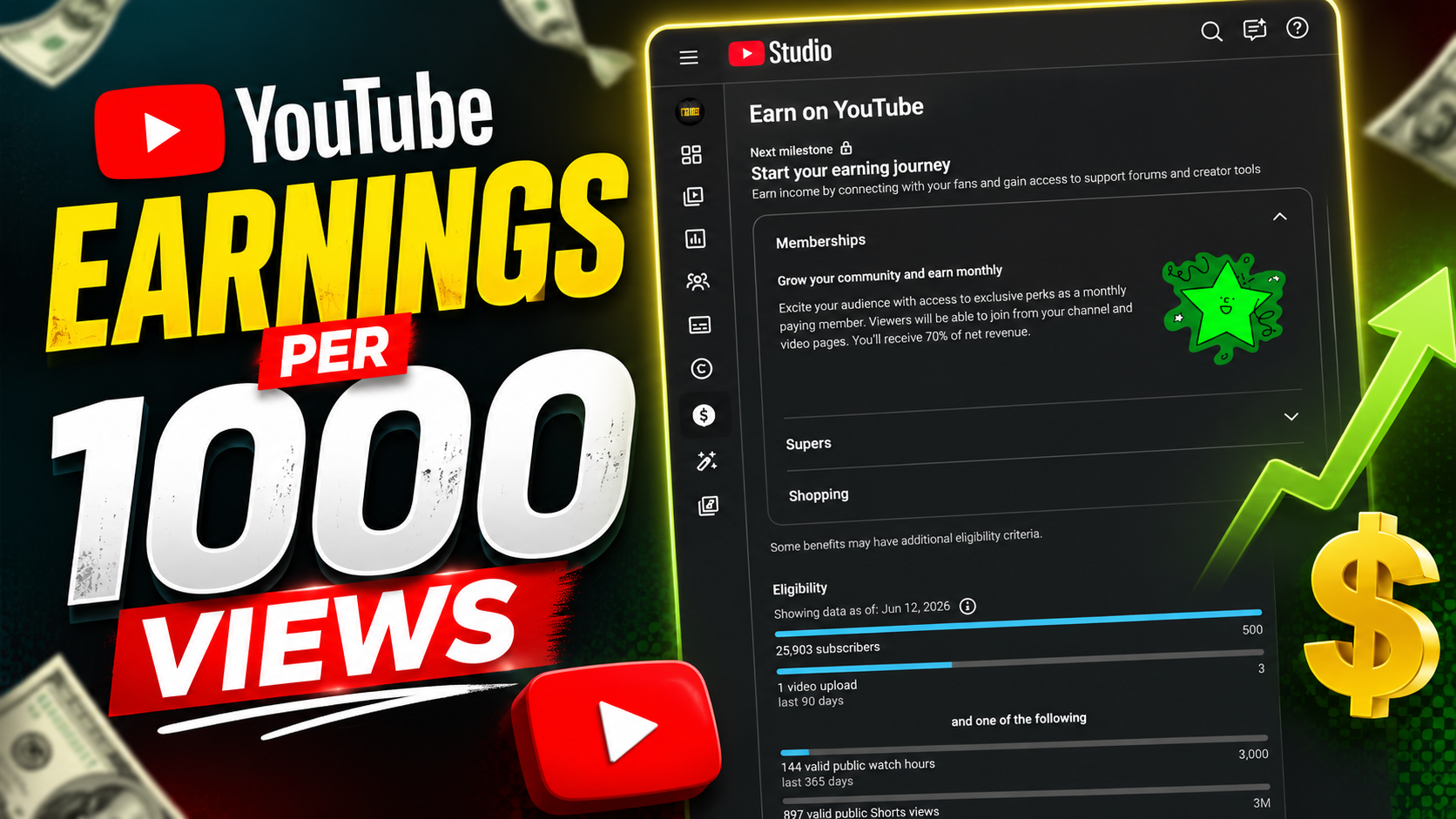
Understanding YouTube Earnings: How Much Do You Make Per 1000 Views?
Curious about YouTube earnings? Discover how much creators really make per 1000 views and learn the factors that influence these earnings today.
The YouTube Partner Program Explained
The YouTube Partner Program (YPP) is the gateway through which creators can start earning money from their content on the platform. To qualify for YPP, a channel must meet certain eligibility criteria, which include having at least 1,000 subscribers and 4,000 watch hours over the past 12 months. Once these thresholds are met, the channel becomes eligible to apply for the program. Upon approval, creators can start monetizing their videos through ads, channel memberships, Super Chats, and more.
The process of joining the YPP also includes setting up a Google AdSense account, which is necessary for receiving payments. AdSense is the platform through which YouTube channels are paid for the advertisements shown on their videos. After linking an AdSense account, creators can choose to enable monetization on their videos, allowing ads to be displayed. Revenue generated from these ads is then shared between YouTube and the creator, with the creator typically receiving 55% of the ad revenue.
It's important to note that joining the YPP does not guarantee immediate significant earnings. The amount of money a creator makes depends on a variety of factors, including the number of views, the type of ads shown, and the engagement of the audience. Thus, understanding the nuances of how YouTube earnings work is crucial for any creator looking to maximize their revenue potential.
Factors Influencing Earnings Per 1000 Views
Several factors influence how much a YouTube creator earns per 1000 views, commonly referred to as CPM (Cost Per Mille). One of the primary factors is the geographical location of the viewers. Advertisers are willing to pay more to reach audiences in certain regions, such as the United States, Canada, and European countries, compared to other parts of the world. Therefore, a channel with a large audience in high-paying regions will likely earn more per 1000 views.
Another significant factor is the niche or category of the content. Advertisers often pay higher CPMs for videos in niches that have high commercial value, such as finance, technology, and health. For example, a tech review channel might attract higher-paying ads from companies selling gadgets and software, while a channel focused on entertainment might have lower-paying ads. This variance can lead to substantial differences in earnings per 1000 views between channels in different niches.
Viewer engagement also plays a crucial role in influencing earnings. High engagement rates, including likes, comments, and shares, can indicate to YouTube's algorithm that the content is valuable and relevant, leading to better ad placements. Additionally, videos with higher watch times are more likely to have multiple ads shown during the video, increasing the potential revenue. Therefore, creators who can keep their audience engaged are more likely to see higher earnings per 1000 views.
Revenue Streams for YouTube Creators
Beyond traditional ad revenue, YouTube creators have several other streams of income available to them. One popular method is through channel memberships, where viewers can pay a monthly fee to gain access to exclusive content and perks. This model not only provides a steady income but also fosters a sense of community and loyalty among subscribers.
Super Chats and Super Stickers are another way for creators to earn money, particularly during live streams. Viewers can purchase these features to highlight their messages or show support, with a portion of the revenue going to the creator. Live streaming can be a lucrative opportunity for creators who have a dedicated and engaged audience willing to contribute financially.
Merchandise sales are also a significant revenue stream for many YouTube creators. By selling branded products such as clothing, accessories, or digital goods, creators can capitalize on their brand identity and fan base. Platforms like YouTube Merch Shelf allow creators to display their merchandise directly beneath their videos, making it easier for fans to purchase items and support their favorite creators. Combining multiple revenue streams can significantly boost a creator's overall income and reduce reliance on ad revenue alone.
Average Earnings: How Much Do You Really Make?
Estimating average earnings per 1000 views on YouTube can be challenging due to the numerous variables at play. However, on average, creators can expect to earn between $1 and $5 per 1000 views. This range can vary widely depending on the factors previously discussed, including audience location, niche, and engagement levels.
For example, a channel with a majority of viewers from high-paying regions like the United States might earn closer to the upper end of the range, or even higher. Conversely, a channel with a global audience, including viewers from lower-paying regions, might see earnings closer to the lower end of the spectrum. Additionally, channels in high-value niches like finance or technology may consistently earn higher CPMs compared to those in entertainment or lifestyle categories.
It's also worth noting that these figures represent gross earnings before YouTube's share is deducted. YouTube typically takes a 45% cut of ad revenue, leaving creators with 55%. Therefore, if a creator earns $4 per 1000 views, their actual earnings after YouTube's share would be $2.20 per 1000 views. Understanding these averages can help creators set realistic expectations and develop strategies to optimize their earnings.
The Role of Ad Types in Revenue Generation
The type of advertisements shown on a YouTube video greatly impacts the revenue generated. There are several ad formats, each with different earning potentials. Skippable video ads, which viewers can skip after five seconds, are among the most common. These ads typically pay based on how many viewers watch the ad for at least 30 seconds or interact with it. While they may not always result in high earnings, their frequency can contribute significantly to overall revenue.
Non-skippable video ads, as the name suggests, must be watched in full and usually last between 15 to 20 seconds. Because viewers are required to watch the entire ad, these tend to have higher CPMs compared to skippable ads. However, they can also lead to viewer frustration if overused, potentially affecting audience retention and engagement.
Display ads and overlay ads are additional formats that can contribute to a creator's earnings. Display ads appear next to the video on desktop, while overlay ads are semi-transparent banners that appear on the lower 20% of the video. These ads usually have lower CPMs compared to video ads but can still provide a steady stream of revenue, especially when combined with other ad formats. Understanding the role of different ad types can help creators strategically monetize their content without compromising viewer experience.
Understanding CPM and RPM Metrics
CPM (Cost Per Mille) and RPM (Revenue Per Mille) are critical metrics for understanding YouTube earnings. CPM refers to the amount advertisers pay for every 1000 impressions of their ads on a video. It's a measure of the revenue potential of a video from the advertiser's perspective. High CPMs indicate that advertisers are willing to pay more to reach the video's audience, often due to the audience's demographics or the video's niche.
RPM, on the other hand, represents the actual earnings a creator receives per 1000 views. This metric takes into account YouTube's share of the ad revenue, providing a more accurate picture of a creator's earnings. RPM is calculated by dividing the total revenue earned by the total number of views, then multiplying by 1000. For example, if a creator earns $200 from 100,000 views, their RPM would be $2.
While CPM focuses on the advertiser's cost, RPM provides a clearer view of the creator's earnings. By monitoring both metrics, creators can better understand their revenue trends and identify opportunities for improvement. For instance, a high CPM but low RPM might indicate that a significant portion of the revenue is being taken by YouTube, or that not all views are monetized. By analyzing these metrics, creators can adjust their content strategy to maximize their earnings.
Tips to Increase Your YouTube Earnings
Increasing YouTube earnings requires a combination of strategic content creation and audience engagement. One effective strategy is to focus on creating high-quality, engaging content that resonates with your target audience. High engagement rates, such as likes, comments, and shares, signal to YouTube's algorithm that your content is valuable, leading to better ad placements and higher revenue potential. Additionally, longer videos with high watch times can accommodate multiple ad breaks, increasing the overall ad revenue.
Another tip is to diversify your revenue streams. Relying solely on ad revenue can be risky, as it fluctuates based on various factors. By incorporating channel memberships, merchandise sales, and Super Chats, creators can build a more stable and diversified income. Offering exclusive content or perks to channel members can encourage more viewers to join, while live streaming and engaging with your audience can boost Super Chat contributions.
Optimizing your video titles, descriptions, and tags for search engines can also help increase your earnings. By using relevant keywords and compelling titles, you can improve your video's visibility and attract more viewers. Higher visibility leads to more views, which in turn increases the potential for ad revenue. Additionally, collaborating with other creators in your niche can introduce your channel to new audiences, further expanding your reach and revenue potential. By implementing these tips, creators can take proactive steps to enhance their earnings and grow their YouTube channel.
Common Myths About YouTube Monetization
There are several myths surrounding YouTube monetization that can mislead new creators. One common myth is that you need millions of views to make a significant income on YouTube. While high view counts can certainly boost earnings, many successful creators earn substantial income with smaller but highly engaged audiences. The key is to focus on building a loyal fan base and diversifying revenue streams beyond ad revenue alone.
Another myth is that YouTube earnings are entirely passive. While it is true that videos can continue to generate revenue long after they are published, maintaining and growing a successful channel requires ongoing effort. Creators need to consistently produce new content, engage with their audience, and stay updated on platform changes and trends. Treating YouTube as a passive income source can lead to stagnation and missed opportunities for growth.
A third myth is that only certain types of content can be monetized. While some niches may attract higher CPMs, creators in any niche can find success with the right strategy. It's essential to focus on creating content that you are passionate about and that resonates with your audience. Authenticity and consistency are more critical factors in building a successful channel than the specific niche. By debunking these myths, creators can approach YouTube monetization with a more informed and realistic perspective.
Conclusion: Maximizing Your YouTube Revenue Potential
Maximizing your YouTube revenue potential involves understanding the various factors that influence earnings and strategically leveraging them to your advantage. Joining the YouTube Partner Program is the first step, but it's equally important to diversify your income streams through channel memberships, merchandise sales, and live streaming. By focusing on creating high-quality, engaging content and optimizing for search engines, creators can attract more viewers and increase their ad revenue.
Monitoring key metrics like CPM and RPM can provide valuable insights into your earnings and help identify areas for improvement. Additionally, debunking common myths and maintaining a realistic perspective can guide creators toward sustainable growth and success. By implementing these strategies and staying committed to your channel, you can unlock your full revenue potential on YouTube and build a thriving online presence.